Sign up for our newsletter to get 10% off for the week!

Understanding Autism: A Parent’s Perspective on Sensory Needs and Everyday Comfort

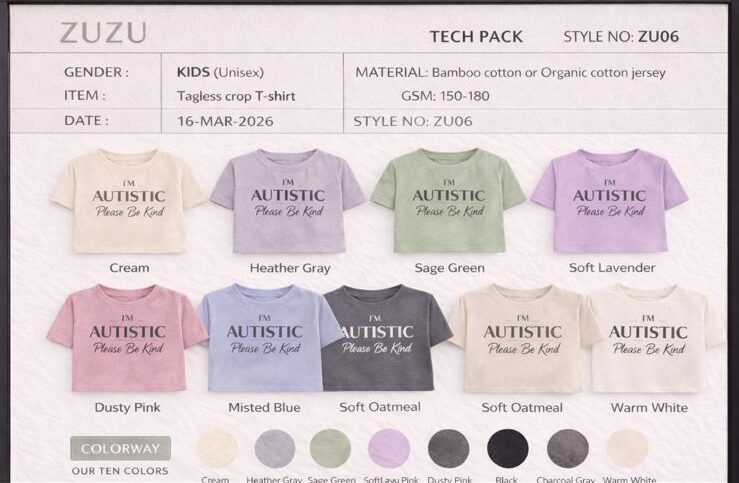
Autism is not something that needs to be “fixed.”
It is a different way of experiencing and interacting with the world.
For many autistic children, everyday experiences can feel more intense — sounds may seem louder, lights brighter, and textures stronger. While every child is unique, one common experience for many families is sensory sensitivity.
Something as simple as getting dressed can become overwhelming.
This is where understanding makes all the difference.
Autism is a neurodevelopmental difference that affects how a person communicates, processes information, and experiences the world. It is often referred to as a spectrum because no two autistic individuals are exactly alike.
Some children may need significant support.
Others may be highly independent.
Many fall somewhere in between.
But one thing remains constant: autistic children are not broken — they simply experience the world differently.
Many autistic children have sensory sensitivities. This means their nervous system processes certain sensations more intensely.
Common sensory triggers can include:
Loud or sudden noises
Bright lights
Strong smells
Certain food textures
Specific fabric textures
Clothing tags or seams
For a child with sensory sensitivities, what feels “normal” to others may feel overwhelming, uncomfortable, or even painful.
It is not stubbornness.
It is not misbehavior.
It is real sensory discomfort.
Clothing is one of the most common daily sensory struggles.
A small clothing detail can feel huge:
Scratchy tags rubbing the neck
Thick internal seams pressing against skin
Tight waistbands causing pressure
Rough or stiff fabrics
Clothes that feel unpredictable in texture
When getting dressed causes discomfort, mornings can quickly turn into stress-filled battles — for both children and parents.
Understanding this helps shift the perspective from frustration to empathy.
Every child is different, but some gentle strategies can help:
Look for smooth, breathable materials that feel gentle on the skin.
Tag-free or printed labels can make a noticeable difference.
Elastic waistbands and restrictive fits can create discomfort for some children.
If they say something “feels wrong,” trust that feeling.
Children often feel more comfortable when clothing feels consistent and familiar.
Small changes can create calmer routines.
One of the most powerful mindset shifts is asking:
“What might this feel like for them?”
Instead of viewing clothing refusal as defiance, it becomes communication.
Autistic children often express discomfort in the only way they can — by avoiding what feels overwhelming.
When we listen, we learn.
Autism is part of who a child is — not something separate from them.
Many autistic individuals have incredible strengths:
Deep focus
Creative thinking
Strong memory
Unique perspectives
Honest communication
Understanding sensory needs is not about limiting a child — it’s about creating environments where they can thrive.
If mornings are hard…
If clothing is a struggle…
If you feel frustrated or exhausted…
You are not alone.
Parenting a child with sensory sensitivities requires patience, understanding, and constant learning. There is no perfect formula — only progress.
Compassion goes a long way.
For your child.
And for yourself.
Autism is not defined by challenges — it is defined by individuality.
When we design environments — and even clothing — with sensory comfort in mind, we send a powerful message:
You deserve to feel safe.
You deserve to feel comfortable.
You deserve to feel understood.
And sometimes, comfort starts with something as simple as what we wear.
No account yet?
Create an AccountEnter Your E-mail to get notified
when it will be LIVE.